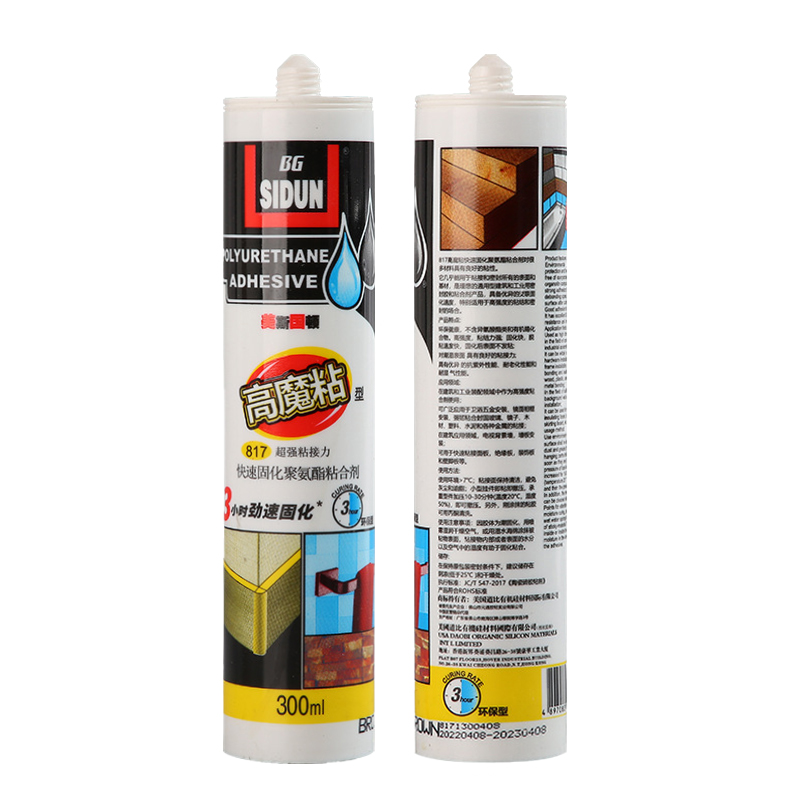
SIDUN 817
817 Polyurethane Bonding Adhesive
Polyurethane adhesive
Application: Selected decorative and building-panel installation
Pack: 300 mL cartridge · 24 cartridges

SIDUN · Knowledge Center
Start with the job: a joint that needs sealing, an assembly that needs bonding, or a product-specific combination of both. The term polyurethane identifies a chemical family; the intended function comes from the individual model and application information.
For sealing, define the gap, adjacent surfaces, movement and exposure. For bonding, explain the parts, bond geometry, how the assembly is supported and the conditions it will experience. Handling and production steps also belong in the description.
Surface porosity, coatings, preparation, application method and subsequent operations can change the evaluation. A woodworking bond involving porous material is a different task from sealing a metal seam or a profile end face.
A shared PU family does not justify transferring application instructions, curing conditions or load claims from one product to another. Keep installation bonding, profile-gap sealing and structural specifications separate during selection.
817 is an installation and panel-bonding direction. PU388 focuses on profile end-face and gap sealing. 189 is a one-component moisture-curing PU wood adhesive whose technical guidance requires at least one porous bonding surface. 300 addresses selected sheet-metal sealing and bonding tasks.
State the exact materials and finishes, assembly sequence and required handling conditions. Ask which instructions and documents apply to the selected model, then evaluate representative parts before agreeing the product and order configuration.
Use a model and a clear application brief when requesting samples, technical information or a quotation.
Polyurethane adhesive
Application: Selected decorative and building-panel installation
Pack: 300 mL cartridge · 24 cartridges
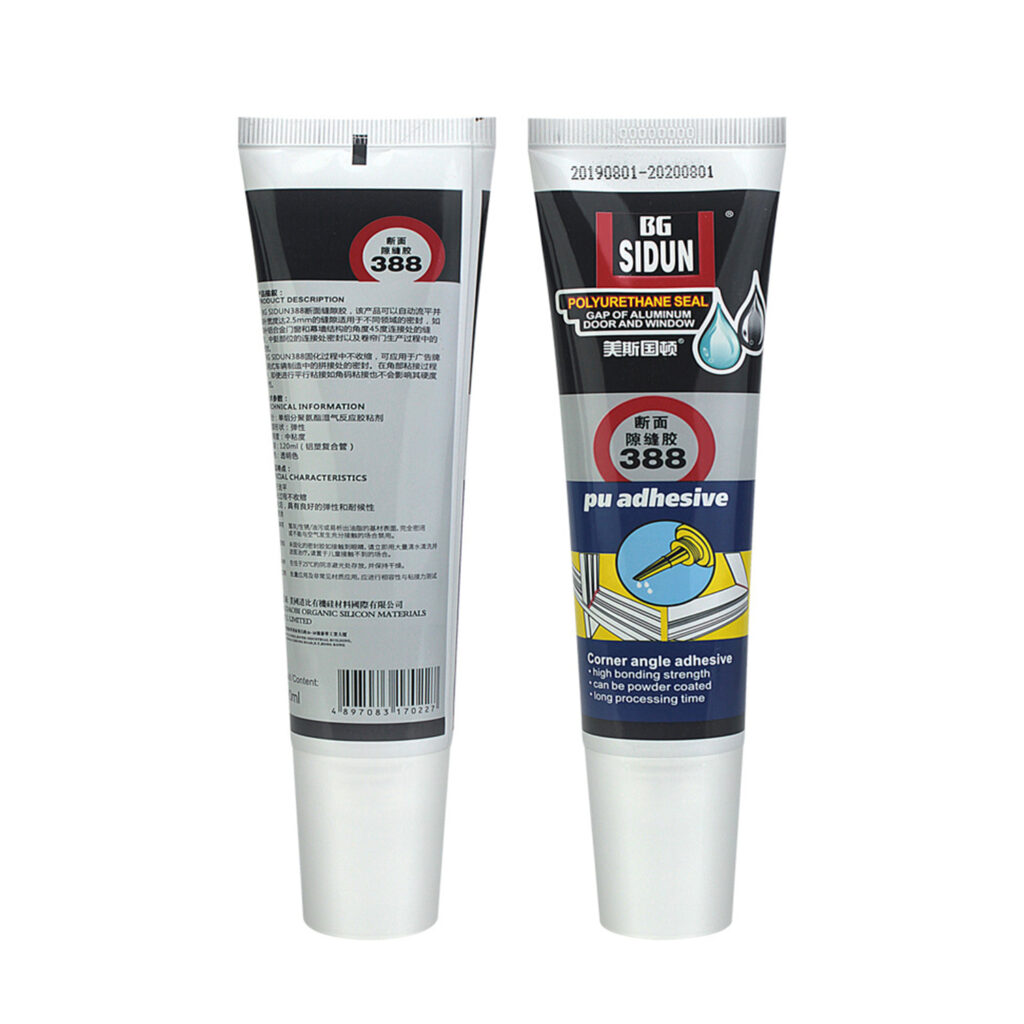
Polyurethane
Application: Selected aluminium profile end-face sealing
Pack: 120 mL tube · 30 tubes
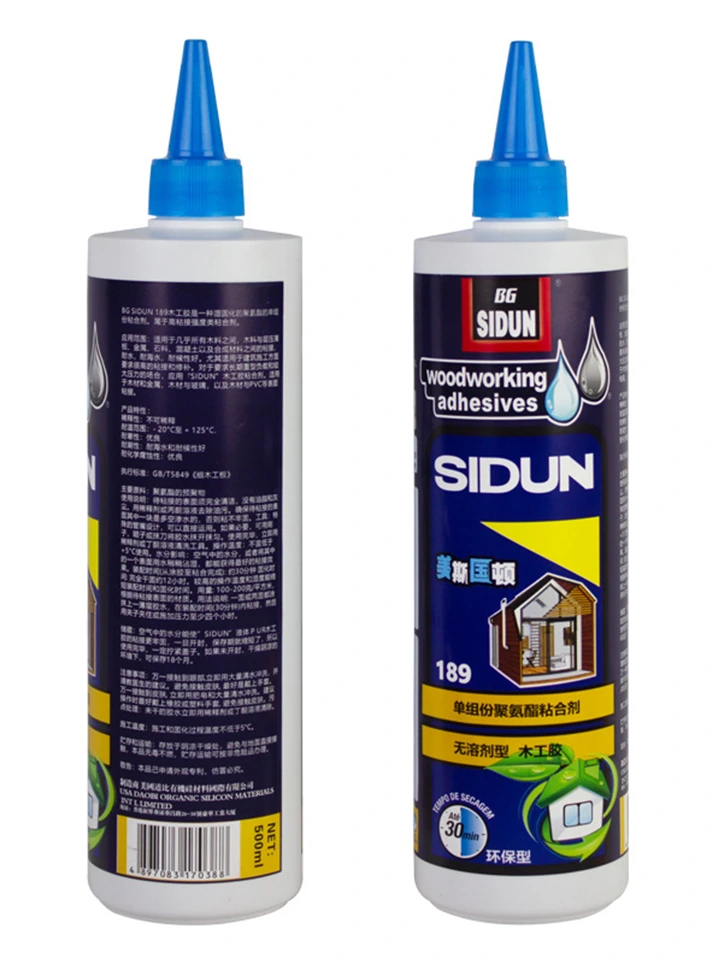
One-component, moisture-curing polyurethane
Application: Wood-to-wood bonding
Pack: PE bottle formats
Illustration — generic joint detail
Polyurethane
Application: Selected sheet-metal seams and joints
Pack: 310 mL cartridge · 12 cartridges
Ask for the time available to apply and assemble the material, the earliest time the parts can be handled, and the conditions for full cure or the required strength. In a one-component moisture-curing system, low moisture access in a closed assembly can slow cure. In a two-component system, the product’s specified ratio, mixing equipment and working time drive the process. Carry out the trial at representative shop conditions.
Qualify each model against the same substrates, process, exposure and acceptance criteria. Compare the TDS and SDS for the candidate model, then check fit with the dispenser and cure schedule. Include the proposed substitution and the project criteria in a technical enquiry. Industrial application questions · TDS and SDS guide.
Share your application, destination market and purchasing needs. We can discuss product selection, sample evaluation, packaging and a focused B2B supply plan.